Fundamental rights and founding texts
Droits fondamentaux et textes fondateurs · Rights and duties · 30 key points
La Déclaration de 1789 · The 1789 Declaration of Rights La Déclaration des droits de l'homme et du citoyen (DDHC) date du 26 août 1789, pendant la Révolution.
The Declaration of the Rights of Man and of the Citizen (DDHC) dates from 26 August 1789, during the Revolution.
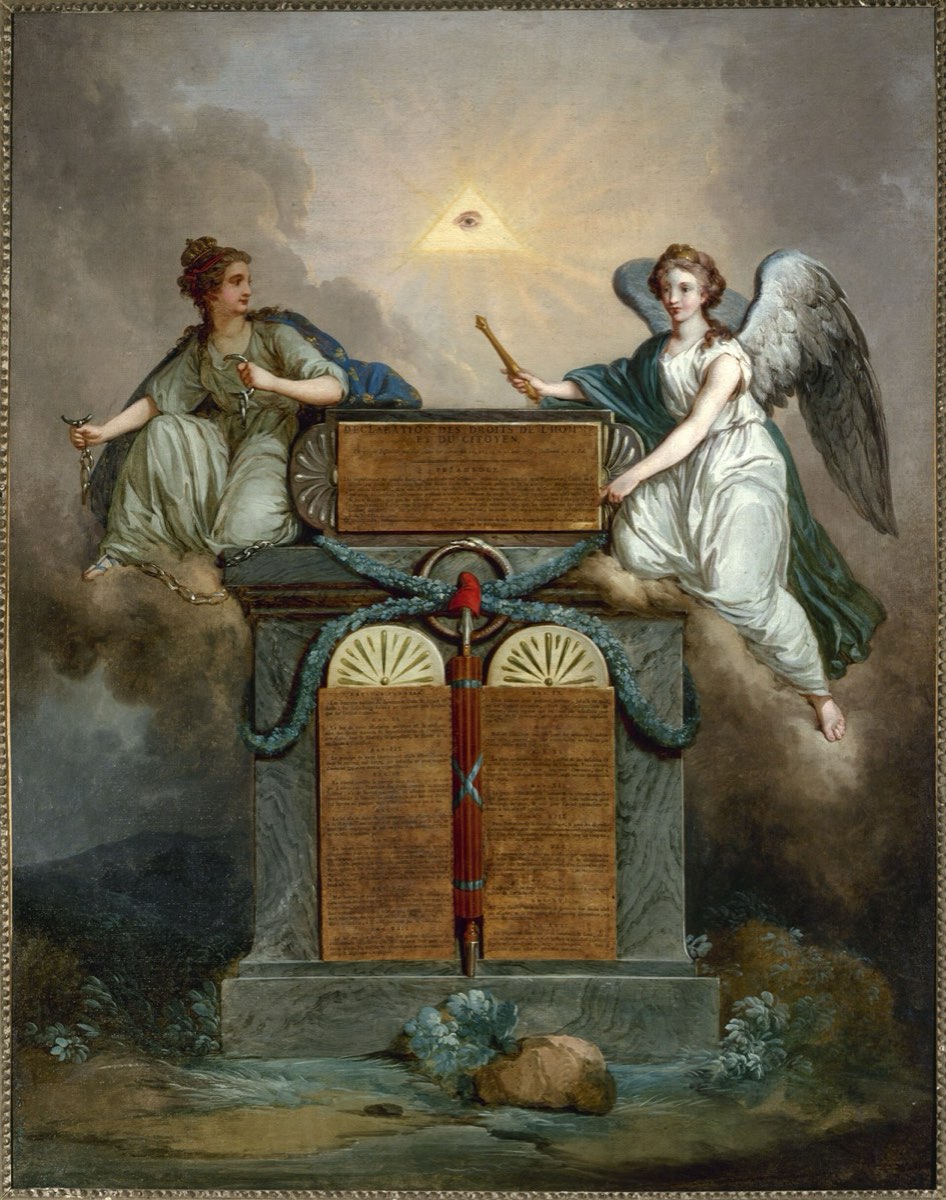
Photo: Jean-Jacques-François Le Barbier · Public domain Article 1er de la DDHC : « Les hommes naissent et demeurent libres et égaux en droits ».
Article 1 of the DDHC: « Men are born and remain free and equal in rights ».
La DDHC est le texte fondateur des droits et devoirs du citoyen ; elle fait partie de la Constitution.
The DDHC is the founding text of citizens' rights and duties; it is part of the Constitution.

La Constitution de 1958 · The 1958 Constitution La Constitution actuelle est celle de la Ve République, du 4 octobre 1958.
The current Constitution is that of the Fifth Republic, dated 4 October 1958.
La Constitution est le texte le plus important : elle organise les pouvoirs et garantit les droits et libertés.
The Constitution is the most important text: it organises the powers and guarantees rights and freedoms.
La Constitution est le texte le plus difficile à modifier (référendum ou Congrès à 3/5).
The Constitution is the hardest text to change (referendum or Congress with a 3/5 majority).

Syndicats et grève · Unions and strikes Le préambule de 1946 ajoute des droits sociaux : égalité femmes-hommes, droit de grève, droit syndical, droit à la santé.
The Preamble of 1946 adds social rights: equality between women and men, the right to strike, trade union rights, the right to health.

Charte de l'environnement · Environmental Charter La Charte de l'environnement (2004, dans la Constitution en 2005) : droit de vivre dans un environnement sain et devoir de le protéger.
The Charter for the Environment (2004, added to the Constitution in 2005): the right to live in a healthy environment and the duty to protect it.

Photo: Medium69 (William Crochot) · CC BY-SA 4.0 La Déclaration universelle des droits de l'homme a été adoptée par l'ONU à Paris en 1948.
The Universal Declaration of Human Rights was adopted by the UN in Paris in 1948.
Droits fondamentaux : droits essentiels de toute personne (vie, dignité, liberté, égalité, sûreté, propriété).
Fundamental rights: the essential rights of every person (life, dignity, liberty, equality, security, property).

Liberté de conscience · Freedom of conscience Liberté de conscience et de religion : croire en la religion de son choix, en changer, ou n'en avoir aucune.
Freedom of conscience and religion: believing in the religion of your choice, changing it, or having none.

La laïcité (1905) · Secularism (1905) Les citoyens français n'ont pas tous une religion ; la religion est un choix personnel.
French citizens do not all have a religion; religion is a personal choice.

Liberté d'expression · Freedom of expression Liberté d'expression : dire et écrire ses opinions, dans les limites de la loi (pas d'injure, pas d'appel à la haine).
Freedom of expression: saying and writing your opinions, within the limits of the law (no insults, no incitement to hatred).

Photo: Benoît Prieur · CC0 Liberté de la presse (loi du 29 juillet 1881) : les journaux informent librement, sans censure.
Freedom of the press (law of 29 July 1881): newspapers inform freely, without censorship.

Photo: Jules* · CC BY-SA 4.0 Droit de manifester : se réunir sur la voie publique pour défendre une idée, après déclaration à la mairie ou à la préfecture, sans violence.
Right to demonstrate: gathering in the street to defend an idea, after notifying the town hall or the préfecture, without violence.
Droit de grève : les salariés peuvent arrêter collectivement le travail pour défendre leurs revendications.
Right to strike: employees can stop work collectively to defend their demands.
Liberté de circulation : aller et venir librement en France et sortir du territoire.
Freedom of movement: coming and going freely in France and leaving the country.
Droit à la sûreté : nul ne peut être arrêté sauf dans les cas prévus par la loi (contre l'arrestation arbitraire).
Right to security (sûreté): nobody can be arrested except in cases provided for by law (protection against arbitrary arrest).

La justice · Justice Présomption d'innocence : toute personne est innocente tant qu'elle n'a pas été jugée coupable.
Presumption of innocence: every person is innocent until they have been found guilty.
Droits de la défense : être assisté par un avocat ; l'aide juridictionnelle aide ceux qui ont peu d'argent.
Rights of the defence: being assisted by a lawyer; legal aid (aide juridictionnelle) helps people with little money.
En garde à vue, on a le droit à un avocat, à un médecin, de prévenir un proche et de garder le silence.
In police custody (garde à vue), you have the right to a lawyer, to a doctor, to inform a relative and to remain silent.

Abolition de l'esclavage · Abolition of slavery Dignité humaine : interdiction de la torture, de l'esclavage, de la traite et des traitements dégradants.
Human dignity: torture, slavery, human trafficking and degrading treatment are forbidden.

Abolition de la peine de mort · Abolition of the death penalty La peine de mort est abolie depuis 1981 (Robert Badinter) et interdite par la Constitution depuis 2007.
The death penalty has been abolished since 1981 (Robert Badinter) and banned by the Constitution since 2007.

Contraception et IVG · Contraception and abortion IVG (avortement) : autorisée depuis la loi Veil (1975), possible jusqu'à 14 semaines de grossesse ; liberté inscrite dans la Constitution en 2024.
IVG (abortion): allowed since the loi Veil (Veil law, 1975), possible up to 14 weeks of pregnancy; this freedom was written into the Constitution in 2024.
Toute femme, même mineure, peut demander une IVG, sans l'accord du conjoint.
Any woman, even a minor, can request an abortion, without her partner's consent.

L'autorité parentale · Parental authority PMA = procréation médicalement assistée ; ouverte depuis 2021 aux couples de femmes et aux femmes seules (liberté de fonder une famille).
PMA = medically assisted reproduction; open since 2021 to female couples and single women (freedom to start a family).
Mariage : libre choix du conjoint ; ouvert aux couples de même sexe depuis 2013 ; la polygamie est interdite.
Marriage: free choice of spouse; open to same-sex couples since 2013; polygamy is forbidden.
Le divorce est toujours possible : chaque époux peut le demander.
Divorce is always possible: either spouse can ask for it.
L'État peut limiter les libertés au nom de l'ordre public, de la sécurité, de la santé ou des droits d'autrui (intérêt général).
The State can limit freedoms in the name of public order, security, health or the rights of others (general interest).

Le droit de vote · The right to vote Être citoyen : avoir la nationalité d'un État, avec des droits (voter, être élu) et des devoirs.
Being a citizen: having the nationality of a State, with rights (voting, being elected) and duties.